
Climate Greenhouse Hortus Botanicus Amsterdam
BOOM Landscape, in collaboration with ZJA Architects and exhibition designers Designwolf, renovated the Climate Greenhouse of Amsterdam’s Botanical Gardens. Visitors can now experience three different climates and learn about what true biodiversity is. The experience at Hortus Botanicus also tells the story of biodiversity in relation to climate change. 
How does biodiversity happen? Three driving forces
Competition
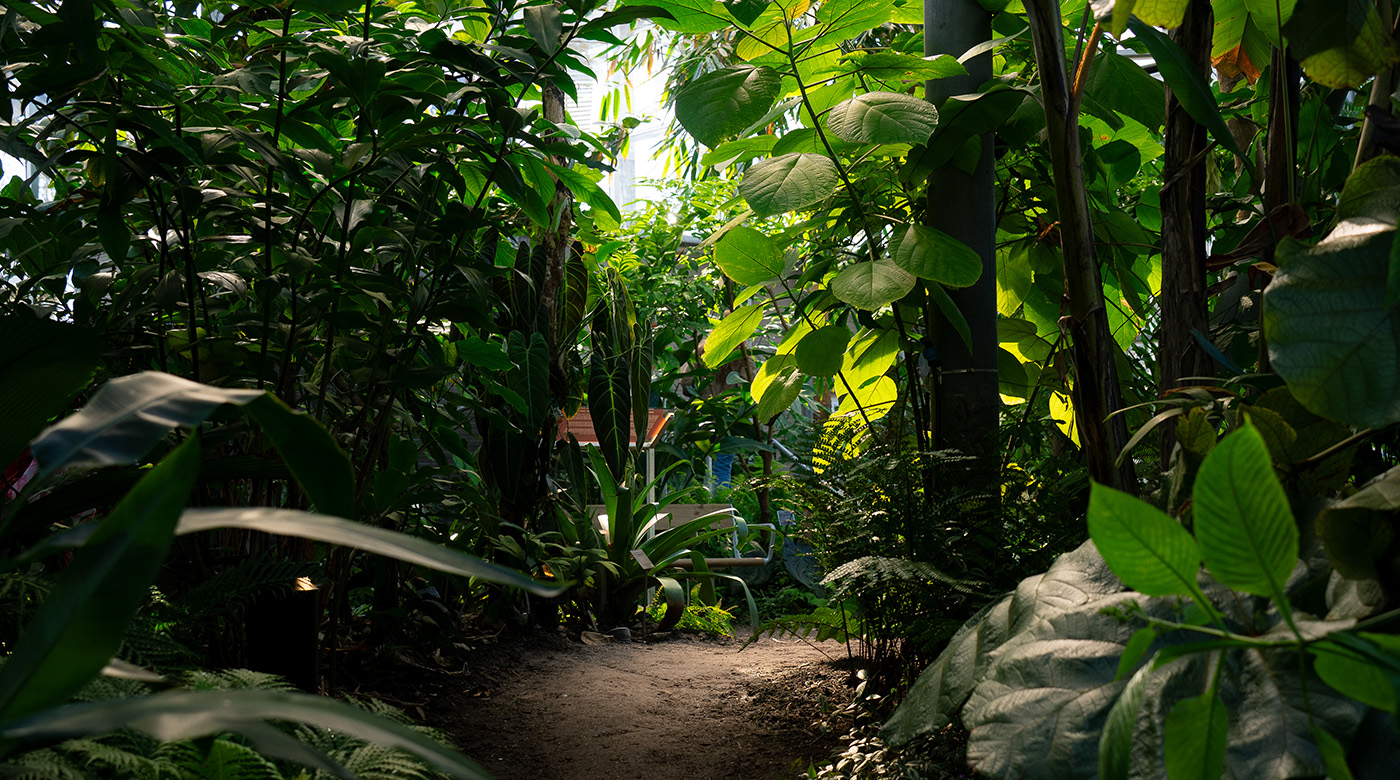
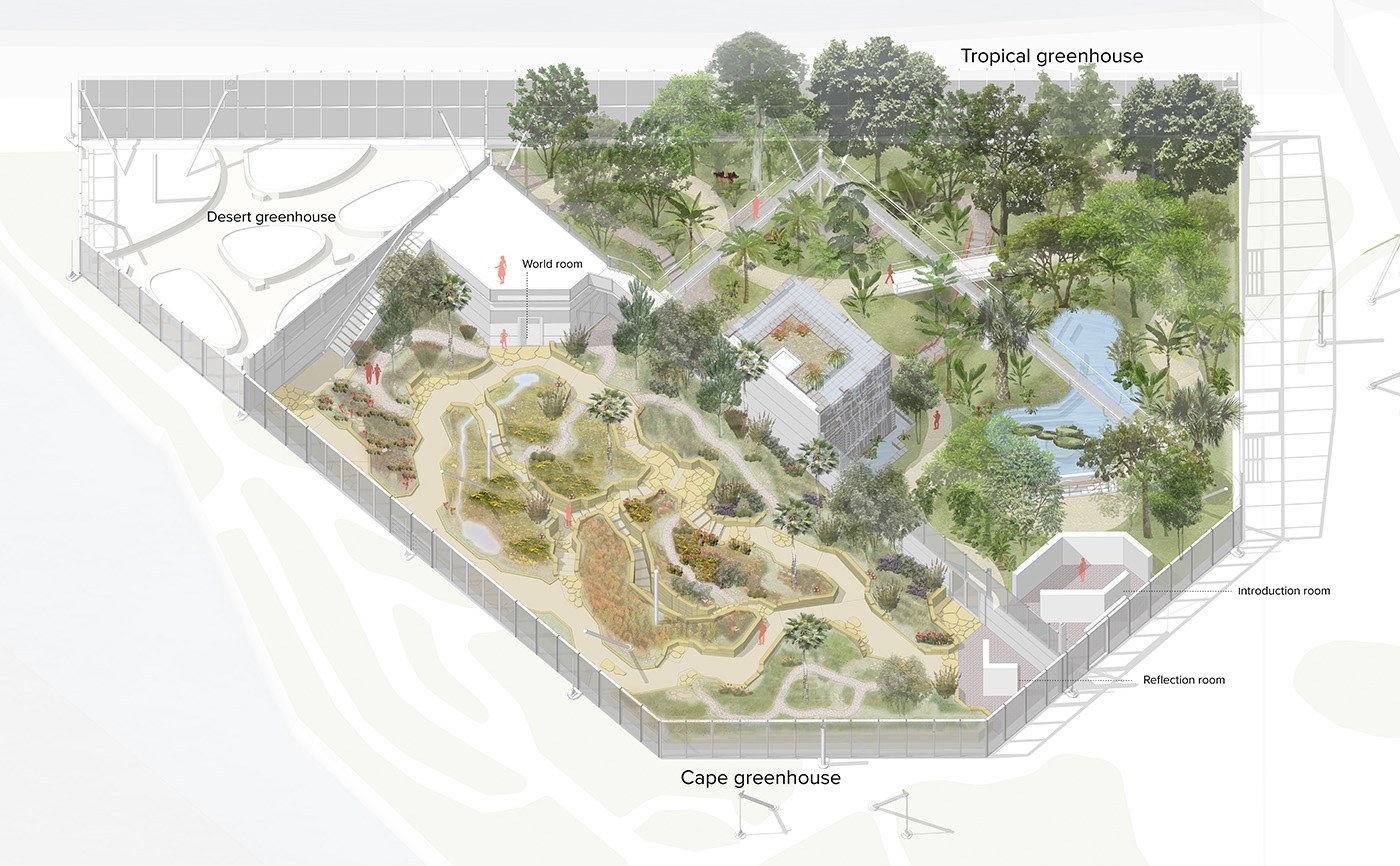
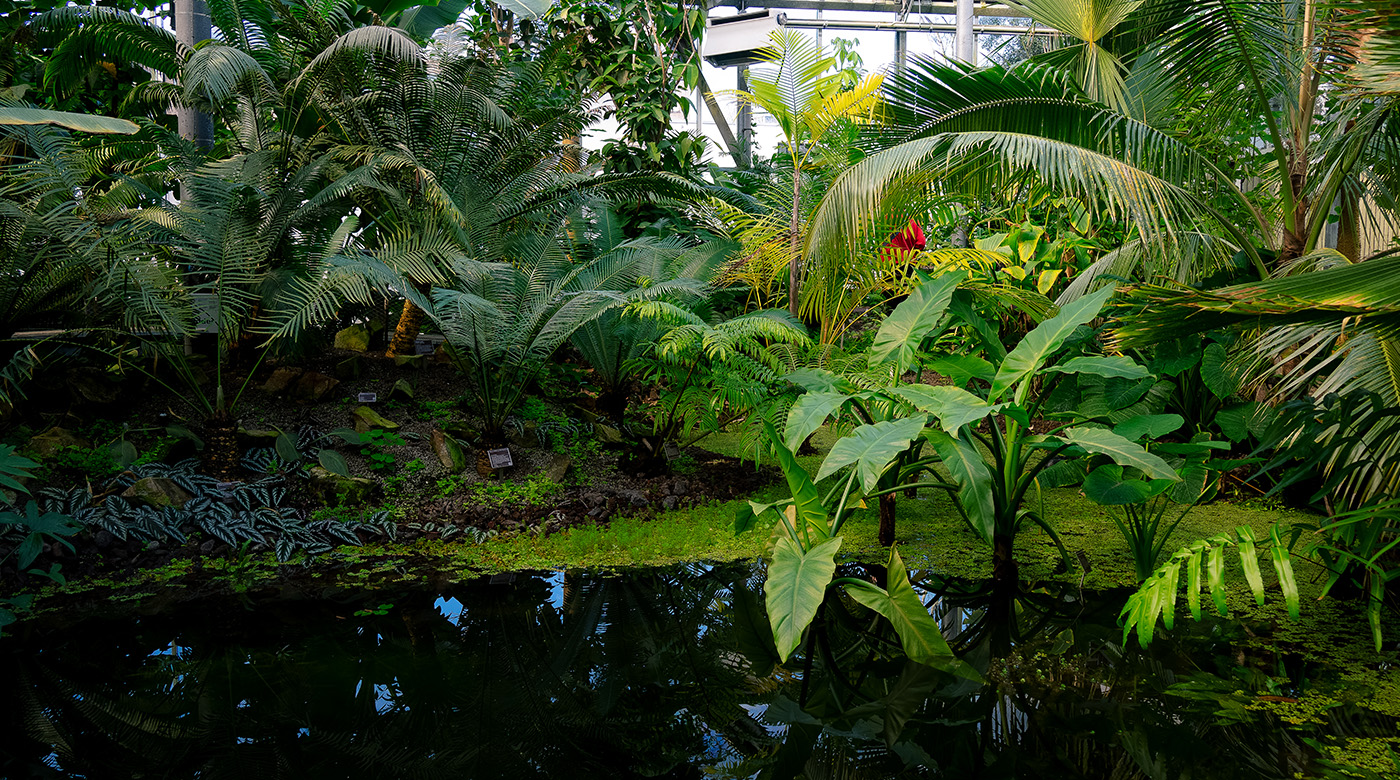
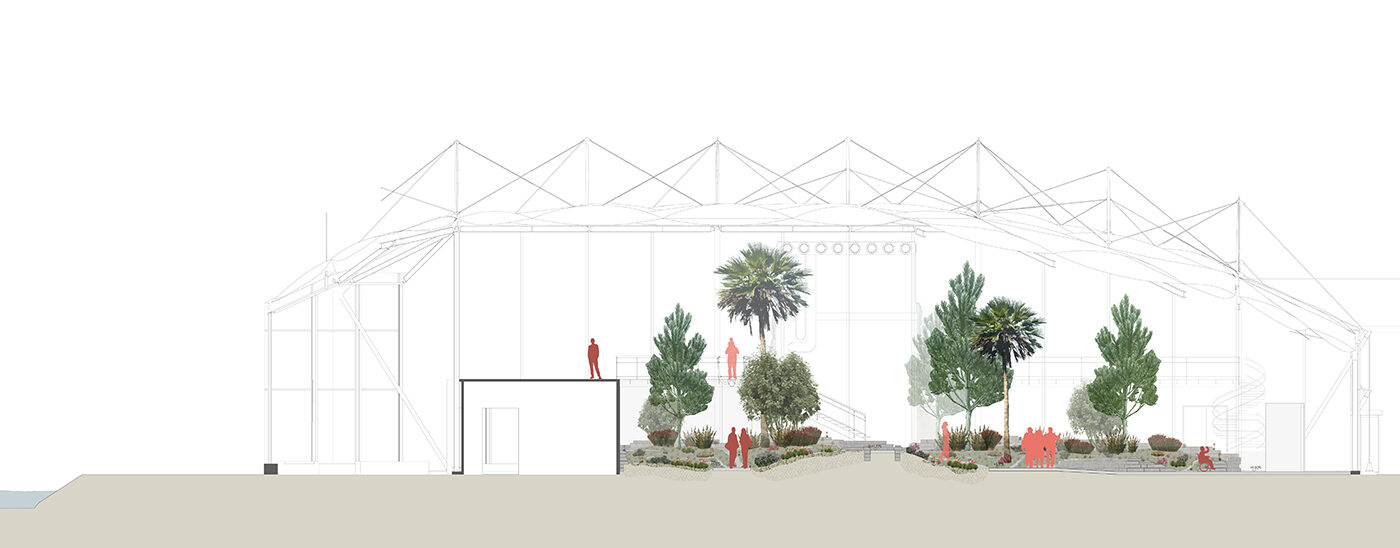
The renovated Climate Greenhouse actually contains three separate greenhouses, each with its own environment and collection of plants. Each greenhouse highlights a key factor that drives biodiversity. In the Tropical Greenhouse, for instance, it’s all about competition. In tropical climates thousands of different plant species wrestle with each other to have access to light. Plants grow round, over and through a maze of greenery, each species fighting to catch the most rays of sun as possible. Some plants evolve ultra green leaves to harness the light as efficiently as possible, others shoot up towards the sky or spread their chances horizontally with wide branches or leaves. Among the tree tops, profiting from the position of the branches of other species, there are rootless plants like epiphytes that extract nutrients from trees or plants, thereby increasing their chances of survival.
Adaptation
In the Desert Greenhouse plants must survive dry conditions and so they adapt. The very little rain that does fall gets absorbed into their thick fleshy leaves (succulents) or bodies (cacti). Many desert plants have also adapted their photosynthesis by opening their stomata only at night, when less moisture evaporates. Another phenomenon illustrated in the Desert Greenhouse is convergent evolution. This is when plants that are under the same climatic conditions develop in very similar ways, though they may grow in different parts of the world and are not related to each other in any way. A good example of this is the American Agave and the African Aloe Vera.
Dynamic succession
In the Cape Greenhouse visitors get to see how dynamic biodiversity is by learning about succession in plant life. Wet winters, dry summers and a cycle of wildfires every seven or eight years are typical for the South African Cape climate. During the dry summers, the heaths can easily catch fire (aided by strong winds), devastating the vegetation. But after the fire, a new life cycle begins again, with bulbous plants first, then annuals and then shrubs. One of the most interesting aspects of this Cape cycle is that it has created ample opportunity to diversify: a single species can successively develop through many small variations. After each fire, there is no competition because every newcomer has equal chances in the new ecosystem. The Cape, for example, has some 400 varieties of heather (Ericaceae).
A tour through three climates
Prologue
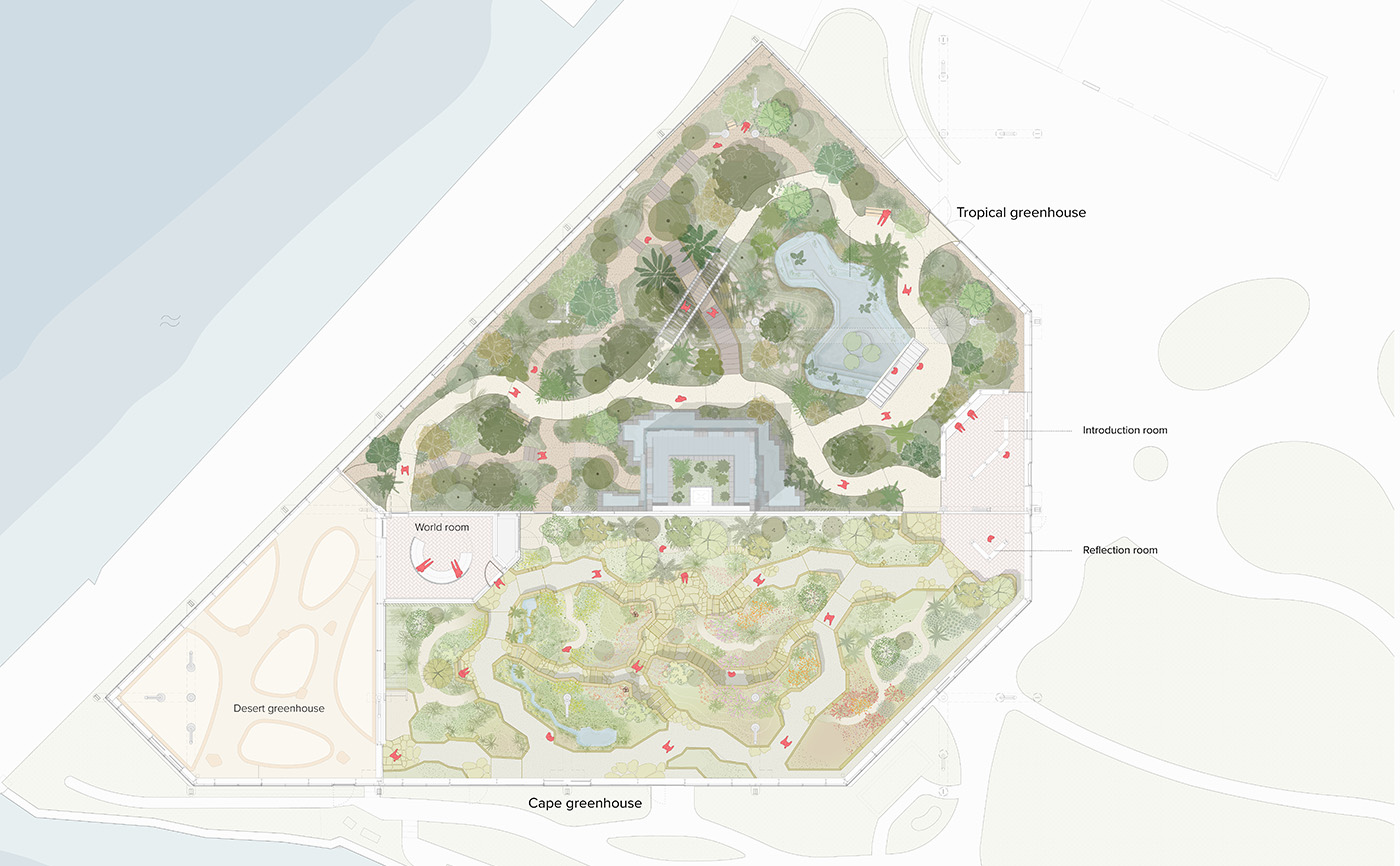
Walking through the Climate Greenhouse teaches visitors about the way in which biodiversity evolves in different climates. The tour begins in the Prologue Room where you find out about what you’ll see in the greenhouses. Audio-visual presentations and information panels explain, for example, the three ambassadors for each ecosystem: the epiphyte, tiger lily and agave/aloe vera.
Tour towards the light
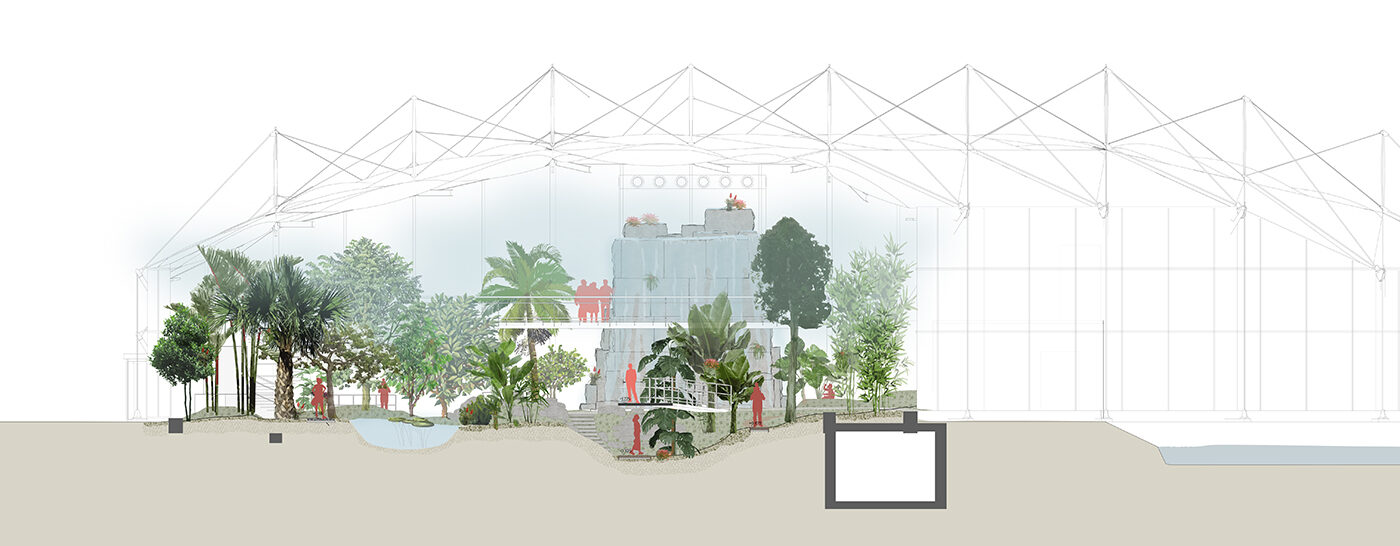
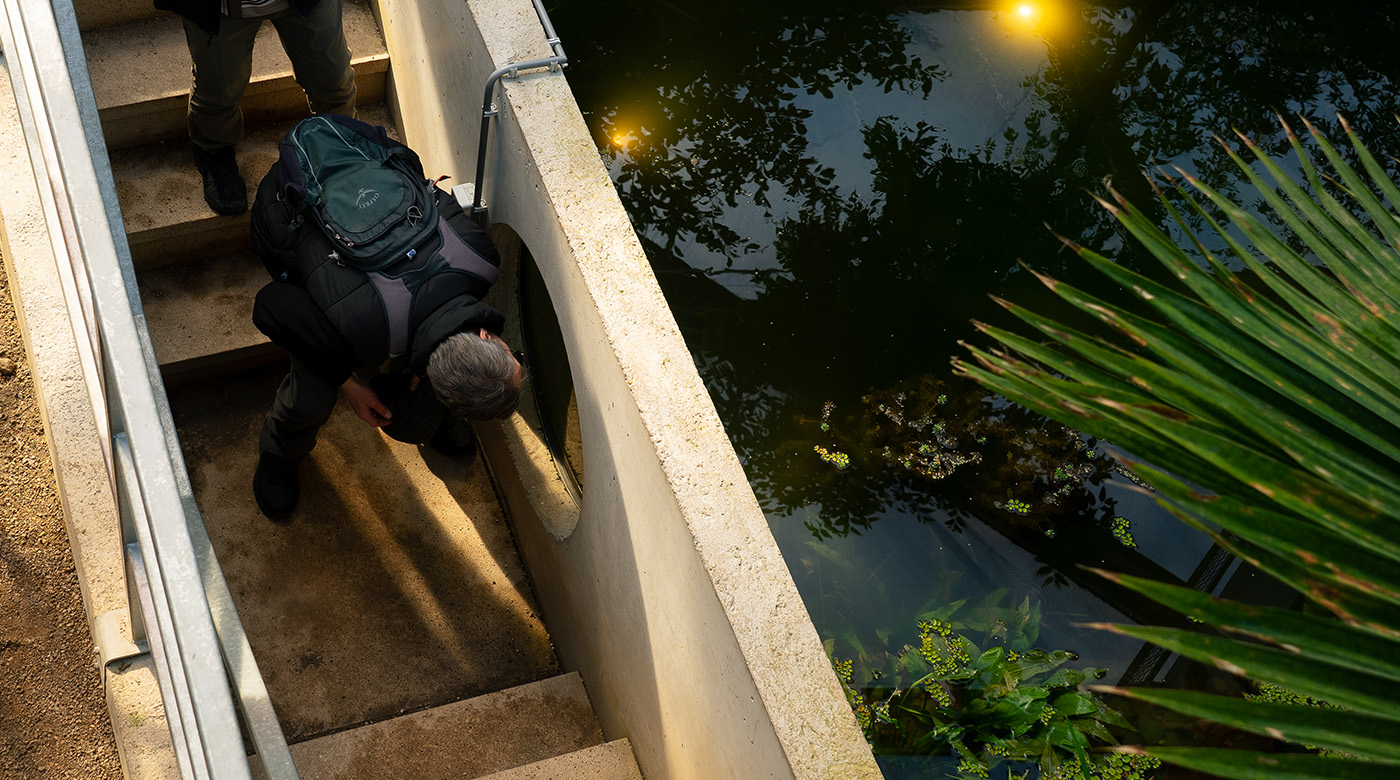
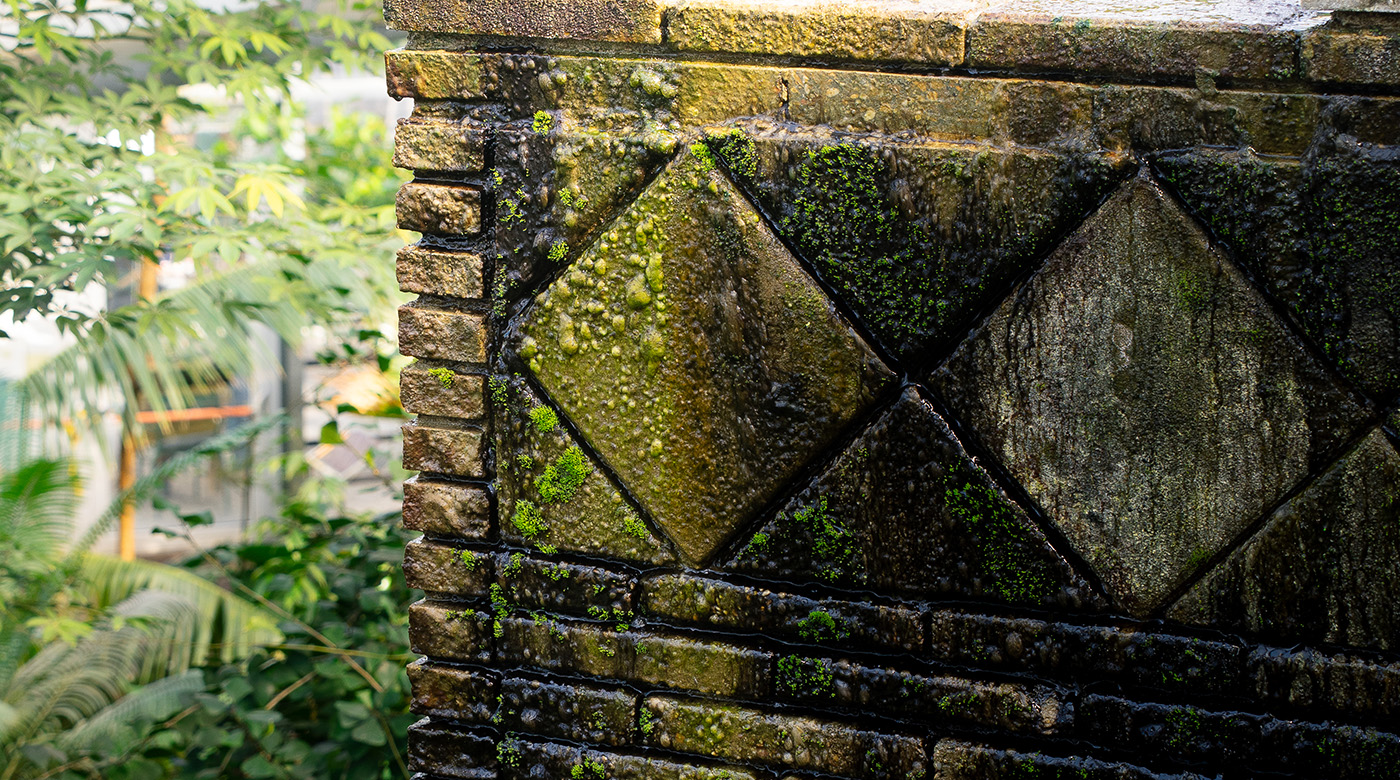
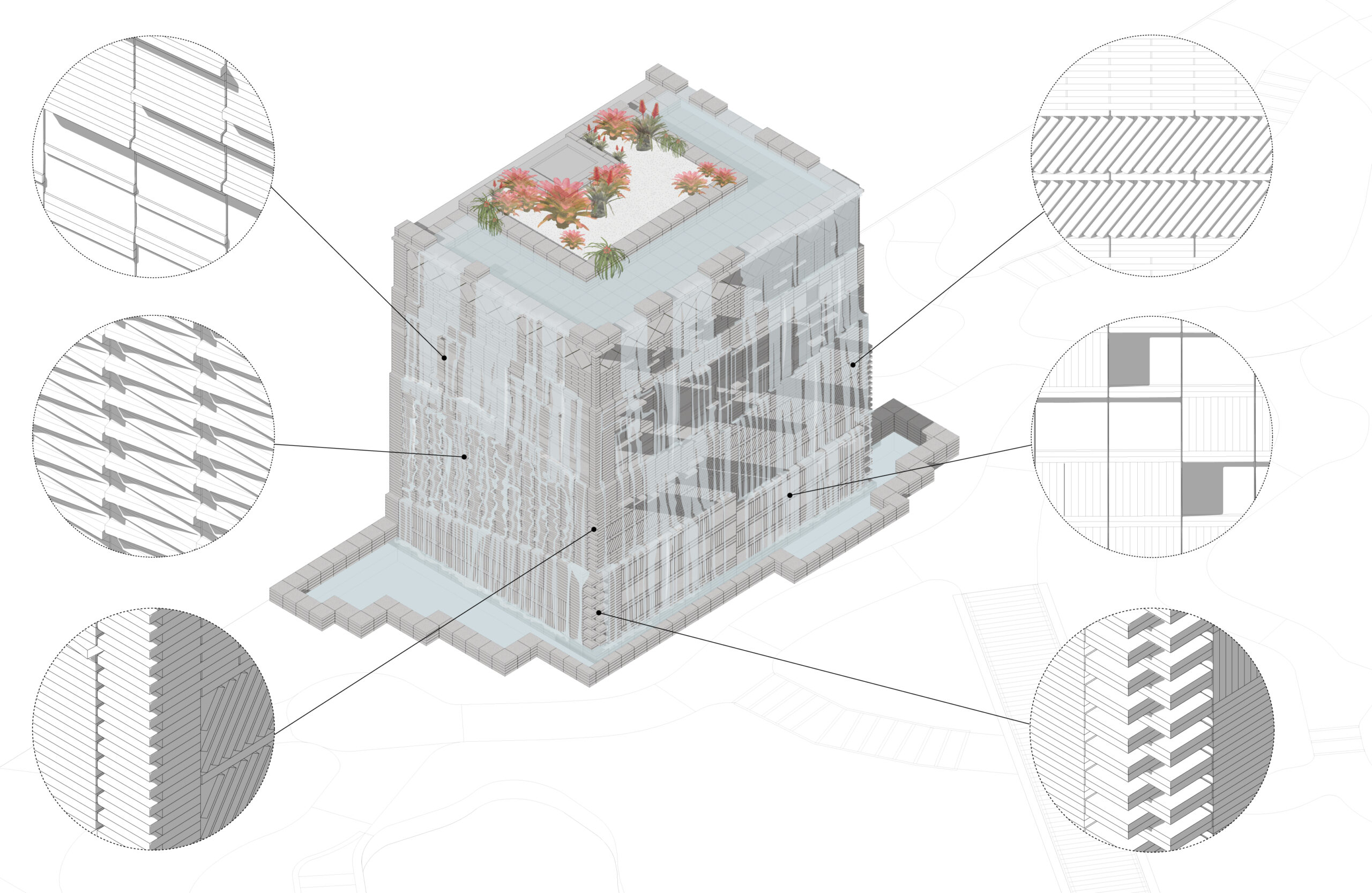
In the Tropical Greenhouse is warm and humid, the conditions hit you as soon as you enter. Like the plants themselves, you’re drawn to the light by way of a route that shows you how the different varieties of plants have adapted in the fight for survival. The main route (with disabled access) and the alternative higher path among the tree canopy end at a terrace at the rim of the pond. Here you can enjoy an impressive view of the 6-metre high waterfall, and overlook the entire greenhouse. The waterfall comprises reused paving stones which all have different textures and so the water cascades differently off each plane. A large glass window gives a beautiful glimpse into life under water. If you visit at the right time, you may be able to see the spectacular flowering of the Victoria waterlily.
The World Room
The next stop on the tour is the World Room: a dark and low-lying museum space showing an educational video on the three factors that drive biodiversity. Plants in the collections of the three greenhouses were determined by these factors to best illustrate biodiversity, but they can be seen as representing larger ecosystems around the world. The high plateau in the World Room offers a 360-degree view over all three greenhouses.
Tour through the desert
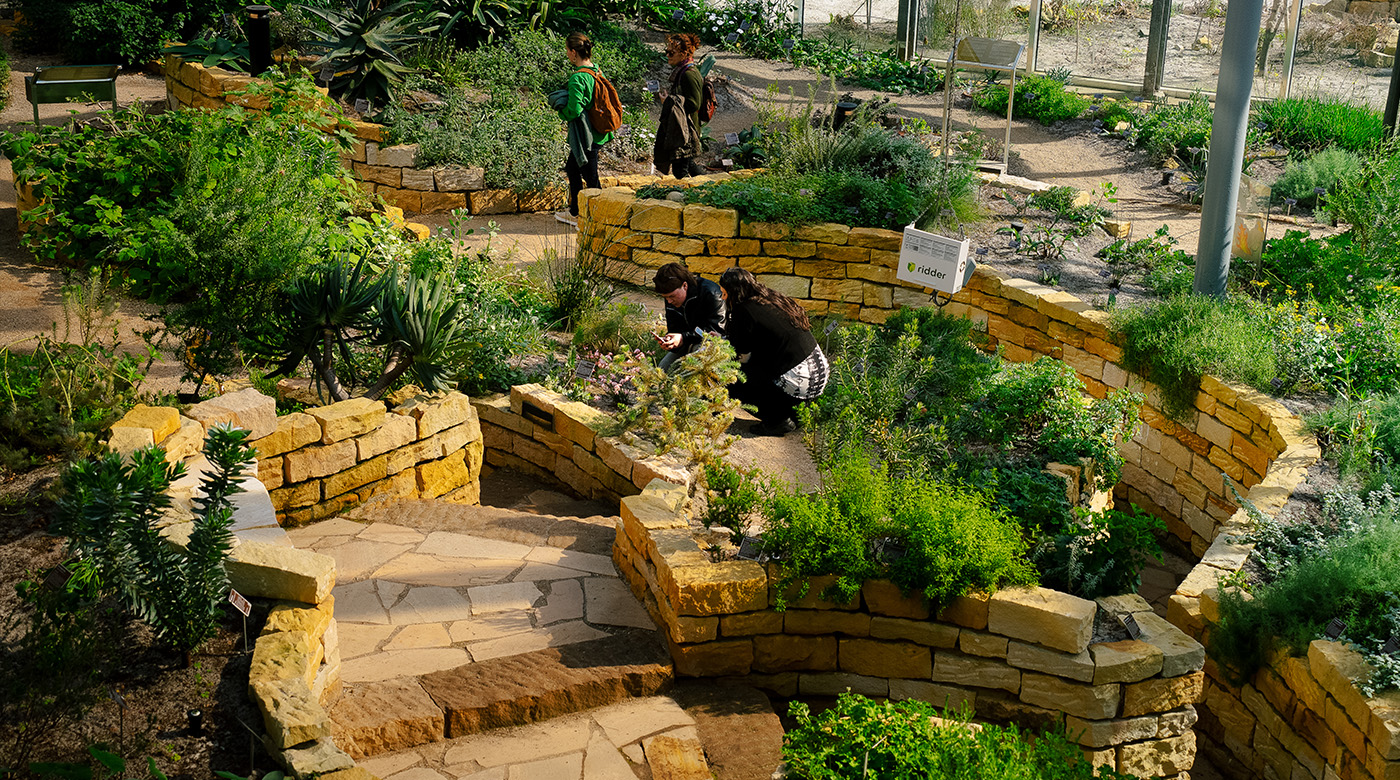
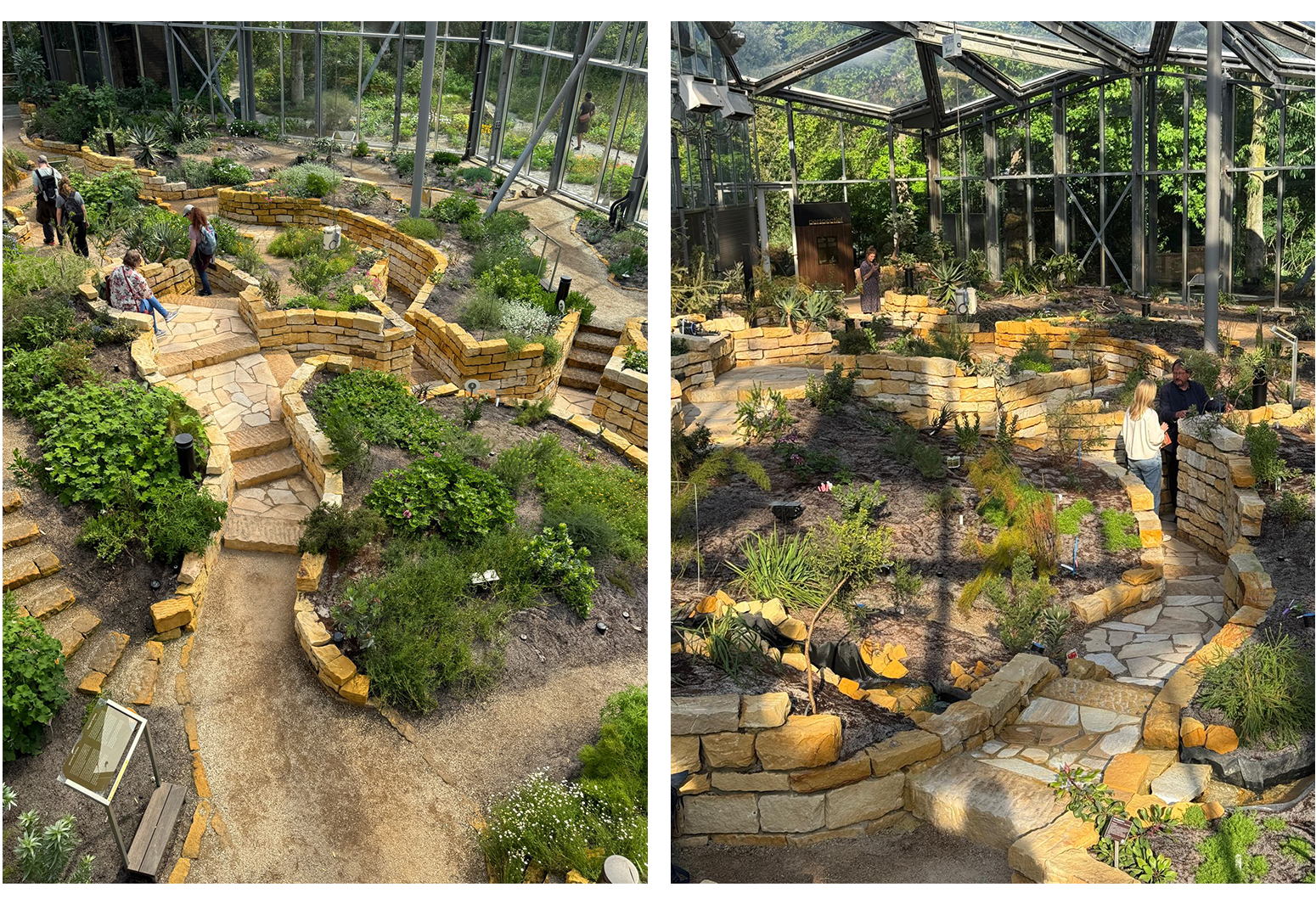
The Desert Greenhouse can be approached from both the World Room and the Tropical Greenhouse. The greenhouse, which was renovated by LANDLAB in 2012-13, immerses visitors in heat, dryness and the intense light of the desert. Sunken paths and raised planters take you on a tour of desert vegetation found all around the world and give you insight into how they managed to adapt to the harsh circumstances.
Fertile Cape
Steady temperatures and successive generations of new growth have made the South African Cape an absolute hotspot for biodiversity. In this greenhouse, you see the enormous genetic diversity of the heather plant (Ericaceae), whether from a distance, on a wander through the sloping indoor landscape or up close and in detail. If you opt to deviate from the main route, you can catch different views over the Cape: from a path the goes up and down, alongside the planters, or at various heights.
Epilogue
Climate change influences our ecosystems, and these small-scale samples of ecosystems experienced in the three greenhouses remind visitors of the importance of biodiversity. As a planet it’s essential that we maintain these systems to ensure a future for life on earth. The tour concludes in the Epilogue Room where images and information recap the vital story of biodiversity.