
Watersquare Sluisbuurt
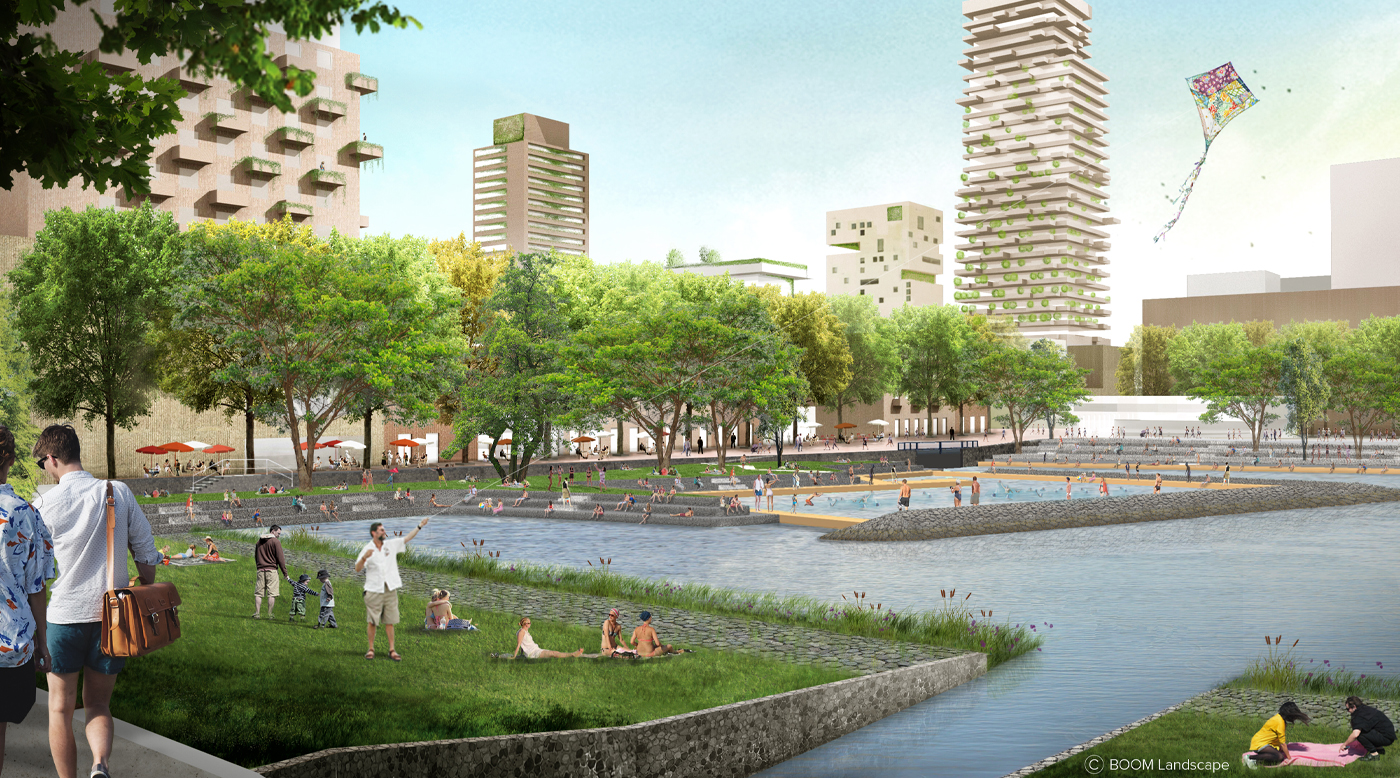
For the municipality of Amsterdam BOOM Landscape designed a special Waterplein (Water Square) in the neighbourhood of Sluisbuurt on Zeeburgereiland. This is the beating heart of the neighbourhood, where locals and visitors meet and enjoy opportunities for play and leisure. It’s also a sustainable heart because Waterplein is the key component in making Sluisbuurt climate-resilient.
Vibrant centre of the neighbourhood
Waterplein will undoubtedly become the central focal point for Sluisbuurt. This is where the new Eastern Docklands ferry will dock (temporarily), where the students of Amsterdam’s Inholland Hogeschool will congregate, and where a continuous path to IJburg starts. As a natural meet-up location, it is a great spot to introduce relaxation and recreational amenities like a sunbathing area, a swimming beach and water sports. Together with the skate park in the adjacent Sportheldenbuurt, it’s a unique public space that raises the bar for what’s on offer in the whole of Zeeburg district.

Directly connected to the river IJ and rain-receptive
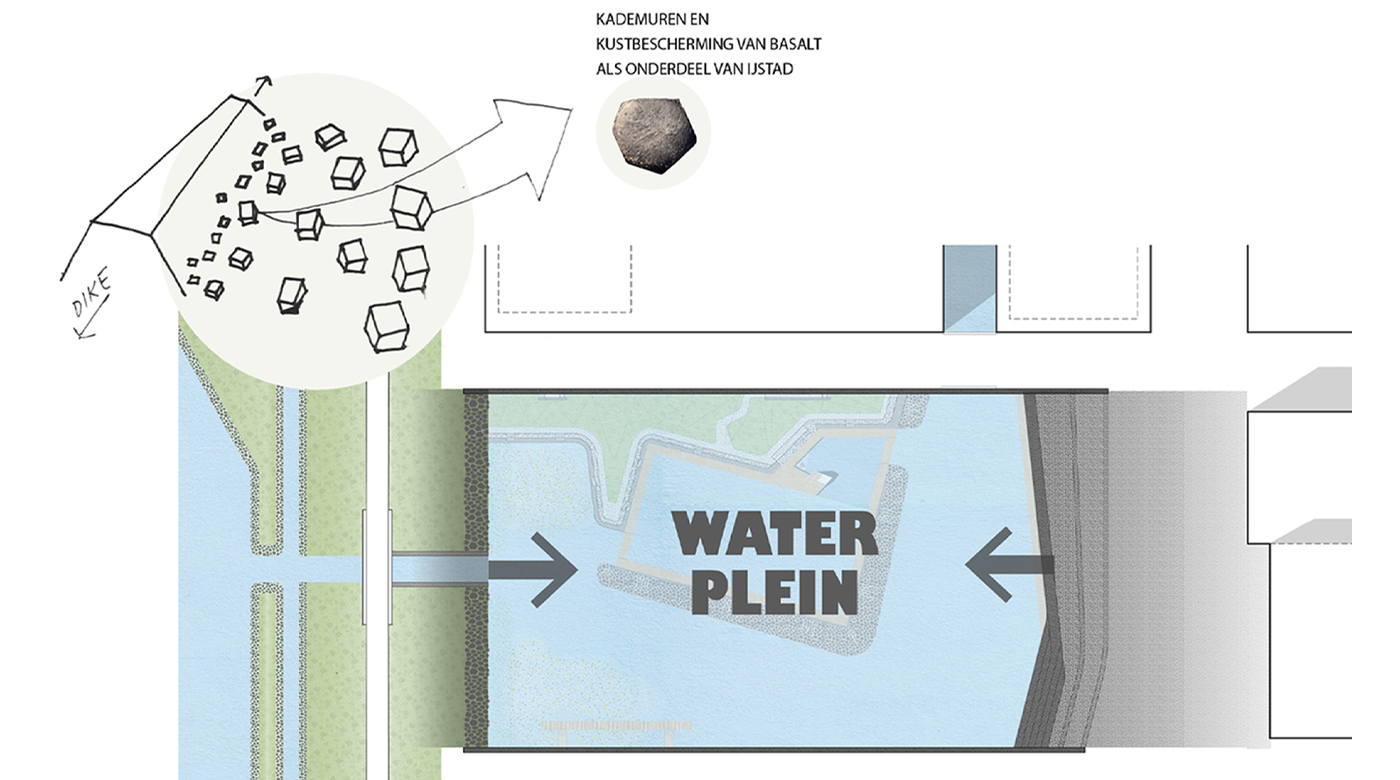
The new neighbourhood Sluisbuurt needs to be resilient to climate change and Waterplein is a major component in this. A defining feature of the square is the water basin which is directly connected to the river IJ via a coupure in the dyke (ZuiderIJdijk) – an aspect that reiterates the area’s identity for it has always stood in connection with this waterway. The square is also rooted to its context by way of the basin’s function as the catch-all of the rainwater system. The canals that loop through Sluisbuurt absorb the excess rainfall and channel it through the basin to the river IJ – preventing rain from entering the sewage system. The entire system keeps clean water fresh and flowing, which maintains healthy water and healthy plant life. The high concentration of water and fresh plants here also helps combat heat stress in the new urban district.
A variety of uses and users
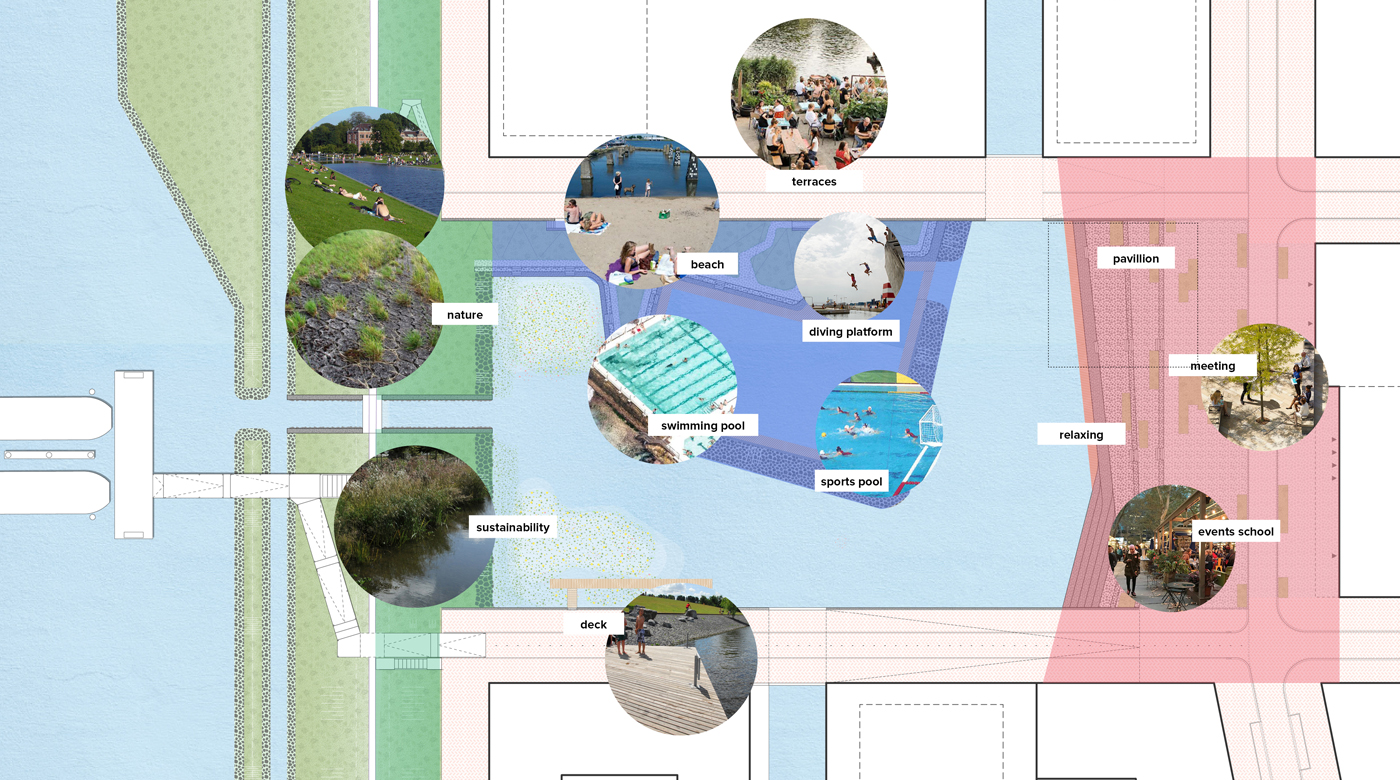
The water basin will serve a variety of uses. The northern side with its sandy beach, for instance, will be a sunbathing and swimming area: you can spend a couple of hours relaxing in the sun, enjoy an ice cream from one of the local cafés, or go for a refreshing dip by jumping into the water from the floating wooden jetty that defines the pool within the basin. The pool, of course, is made up of the same freshwater as the basin and the river. You can even swim in the basin itself, but there you’ll be competing with water sports enthusiasts. Daredevils can dive from the quay, jetty or diving board, others may want to wade in where the water’s edge slowly slopes into the water. The paved area of the square can also be used for various activities: such as an informal meeting place or shaded area for students to study, or as a small-scale events venue such as a market.
Distinctive design
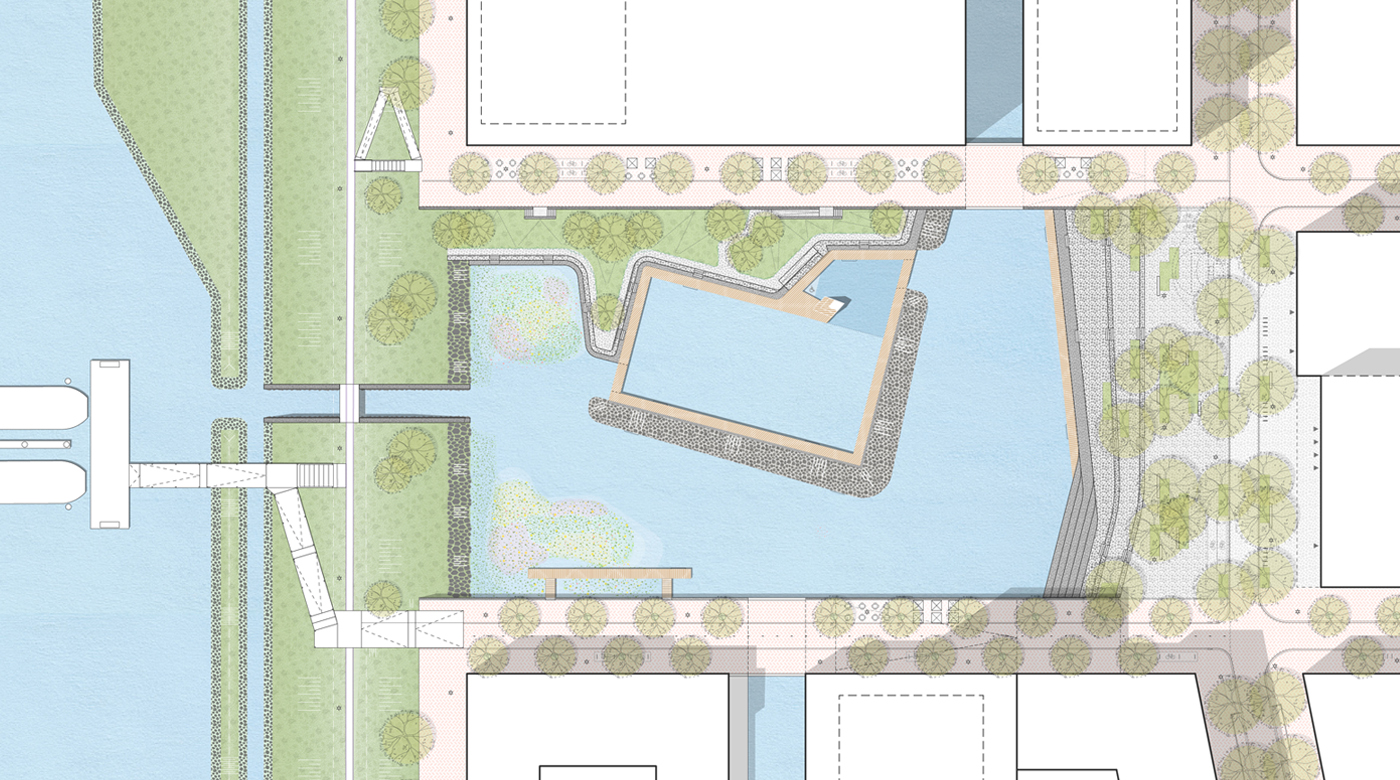
As a public square, Waterplein is not only unique for its great variety of uses, it also has a distinctive look that sets itself apart from the surrounding grid of the neighbourhood. The square departs from the rigidity of the gridded urban plan and has shapes dictated by the new programme. For example, the swimming pool is angled and oriented differently from the grid. The trees on the eastern side (the school’s edge) are scattered, rather than lined up as elsewhere. This gives the square as a whole a unique character.
Rugged banks as an ode to the heritage of the area
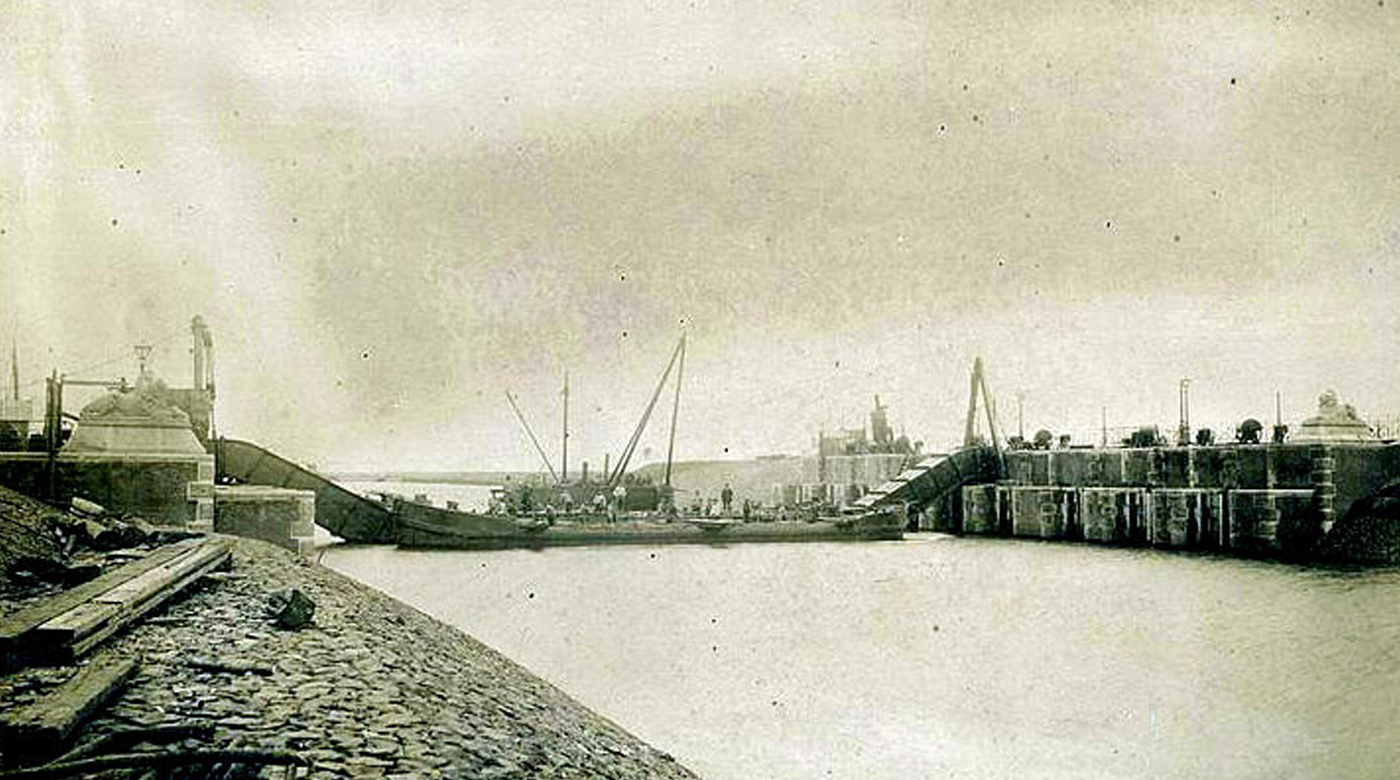
The masterplan for Sluisbuurt is part of the ‘IJ-city’ development: a new part of Amsterdam developed on the former harbour islands and the banks of the river IJ within the ring road. Here you can still see and feel the maritime and industrial past. We wanted to integrate the ruggedness and authenticity of this past into our design. That’s why we chose to clad the embankments of Waterplein with basalt: a material from the past when stone quays were needed to protect against the large passing ships. And it is a material that fits nicely with the high-rises in the neighbourhood. We also decided not to level out the dyke, but to keep it as a feature that reminds us of the area’s history.
Soft and green banks are good for biodiversity
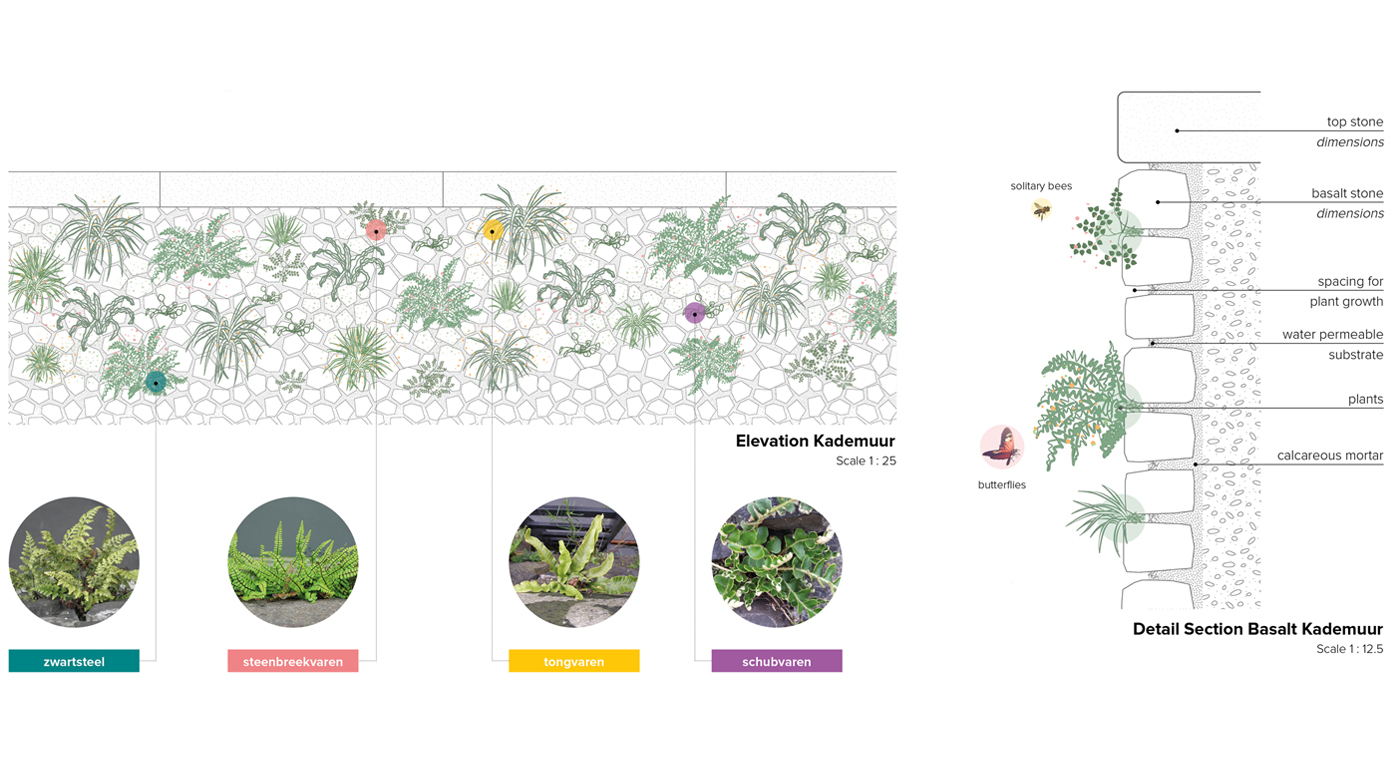
The water’s edge comes in different shapes and sizes, from upright quays to semi-steep banks around the swimming pool, to gently sloping banks where the school’s forecourt runs into the water. Softened edges and greenery on the banks will do a lot for biodiversity. Especially in places where the basalt is loosely arranged, the water-rich habitat will allow for a great variety of plant species and wildlife to thrive.